

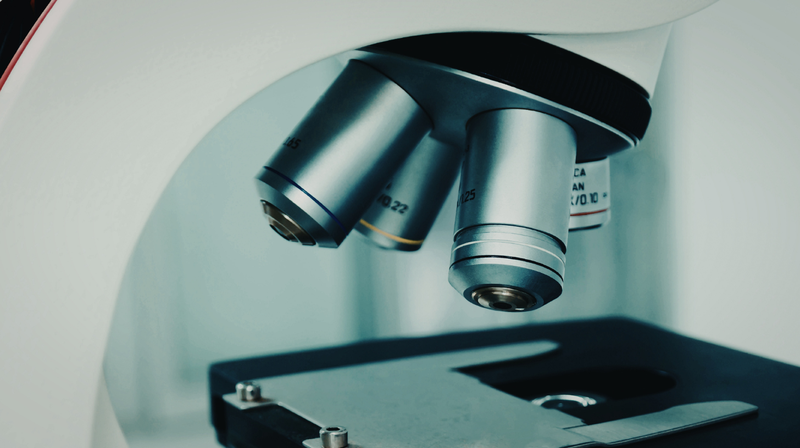
It's 11:47 p.m. on a Tuesday. You're in pajamas. There is a bowl of half-eaten cereal next to your laptop. You’re using a scanning electron microscope (SEM) that costs more than your house.
The microscope is at a lab in North Carolina, but you are not.
Introducing remote lab access; the sleeping beauty of science education that hardly anyone outside the field is aware of. It is why a community college student in rural Idaho can conduct experiments on the same equipment as a graduate student at MIT. It's the same reason geography ceased to be destiny in STEM education circa 2018, and most people never really took note.
A remote lab essentially boils down to three things working in unison. Firstly, some genuine scientific hardware in a building somewhere on our planet. Second, a software interface enabling you to remotely operate that equipment. Third, a camera so you can watch what your experiment is doing in real time.
That's it. No virtual reality headset required. No simulation. The instrument is real. The data is real. You are the only thing that is not physically there.
Imagine you are piloting a remote-control car; only the car is a $400,000 atomic force microscope and instead of running over your sister's flowerbed with it, you're imaging samples of graphene.
Since its launch, the iLab program at The University of Queensland has conducted over 60,000 remote lab sessions with students logging in from 70+ countries. Launched in 1998, MIT's iLab Project has let students from over 25 countries use instruments including microelectronics test stations and an earthquake-simulation shake table. In its Reactor Sharing Program, Stanford performs remote experiments on an actual nuclear reactor. Yes, an actual reactor. Run from a laptop. By undergraduates.
This is something that shocked the people who run university labs: a large part of the life of modern scientific equipment is sitting unused.
In 2019, a study in PLOS ONE that examined high-end research instruments at leading research institutions found they were used actively only 15 to 25 percent of the time, even at some of the best universities. The rest of the time, they just sat there depreciating and needing occasional maintenance while mostly existing as a glorified paperweight, waiting to spring into life once or twice a semester when the one professor or grad student who knew how to use it came knocking.
Remote access flipped that math. Open the equipment after hours and allow students from other schools, other states, other countries to log in and use it on their own time. Now that 15 percent becomes 60 (or more). The instrument earns its keep. The entity that owns it gets more of its investment back. And students who would never be able to come near a million-dollar mass spectrometer get the experience of learning with one.
A remote high school laboratory run by Boston University, consists of a radioactivity counter, thermal expansion apparatus, and dynamic signal analyzer. None of these are toys. This is an actual cesium-137 source that the counter measures its radioactivity with. The setup uses the signal analyzer which is a commercial acoustics research model. A 15-year-old in Mississippi can perform a half-life decay experiment on real radioactive material before bed.
A story that you have probably heard about American education is that the rich schools get the good labs for the kids. The poor schools give the kids some textbook with a picture of a lab, and maybe a Bunsen burner. Then, the good colleges accept the kids who were already privileged enough to have access to good labs. The cycle continues.
That story isn't wrong. It's just incomplete now.
National Science Foundation reported in 2021 how remote lab programs have affected schools serving low-income communities. They found that students at Title I schools that participated in remote lab programs were found to be 23 percent more likely to enroll in STEM courses the next year than similar schools without access. There has been a 31 percent increase in college graduates pursuing STEM majors. These aren't small numbers. That is the type of numbers that make a student finally believe they could possibly achieve such milestones.
LabsLand connects to over 1,500 schools in more than 30 countries and operates one of the most extensive remote lab networks available worldwide. Electronics labs in Spain, robotics labs in Argentina, and biology equipment in the United States are all part of their network. A student in Tennessee can run an experiment on equipment in Buenos Aires before lunch. The technology doesn't care about her zip code.
Mentis Sciences works in advanced composites and aerospace materials; fields where a new generation of engineers must get hands-on experience long before they even set foot on the floor of a corporate lab. Remote access makes that possible at scales none of us envisioned when the company was founded. The child who will design the heat shield on a hypersonic vehicle in 2045 could be doing her first composite tensile test this week, from her bedroom.
When first logging on to a remote lab, the experience for most platforms is really very similar to booking a Zoom call (except you are not meeting with another person, but with a microscope). You schedule a time slot. The system offers to book the equipment. At the start of your slot, you get a control panel in the browser, a live feed video of the instrument, and almost always a chat window open so that staff can talk to you if things go south.
The control panel is instrument dependent. If it was a microscope, maybe you would have sliders to adjust the amount of magnification, the focus, and contrast, and a save button to capture images. You have some buttons that make a robotics arm move and this is combined with camera angles to see what you're doing. An example might be in chemistry, where you trigger valves to release reagents into a sample and then observe its reaction on video.
Once low latency, or the lag between hitting a button and seeing the result, was the bane of remote labs. In the beginning, you clicked then waited two to three seconds hoping that you had not broken something. The most advanced fiber optic networks and cloud computing cut that wait to under 200 milliseconds for almost all experiments. Faster than the reaction time of most people out there. To your brain, the gear is right there with you.
Some experimental studies are still quite awful with respect to remote accessibility. Anything involving smell, or that requires tactile accuracy. Things that the experimenter needs to quickly move in three-dimensional space, like surgery. However, the list of remote-access friendly experiments grows every year.
A remote lab is hard to set up. Really hard. All the video conferencing apps you use day-in-and-day-out are written by armies of engineers, over multiple years, and they still drop calls. Imagine developing a system that must operate a laser cutter remotely while not burning something down.
The University of Deusto, located in Spain, has worked on a remote lab platform since 2007. Eighteen years. Their team has published over a hundred technical papers just on the challenges. How to properly shut down equipment if a student loses internet connection halfway through an experiment. How to stop two students from accidentally sending jumbled up commands? How to ensure the data recorded by a student actually derived from an experiment they were conducting rather than one earlier that week.
These aren't sexy problems. Awards are not given for designing a queue management system for a remote chemistry lab. However, each of these challenges have been overcome dozens of times already by remote lab programs. Inevitable problems that arose when an implementation went awry in an unforeseen way. A technician at one large university said that during its first year of remotely operating a lab, a student somehow crashed the robotic arm into the ceiling because the control software failed to account for its full range of motion. Nobody got hurt. The arm needed repairs. The software got better.
That's how this stuff develops. Slowly. With humility. In a thousand little failures that never makes it to the news.
In the United States, there are nearly 4,200 colleges and universities. Perhaps a few hundred have the sort of advanced equipment that researchers in aerospace, materials science, and defense engineering rely on to do serious work. The other 3,900-something? They have students that might be outstanding engineers, but they won't get the experience that prepares them for it.
Remote labs change that calculation. Not all at once. Not perfectly. But enough so that a state university with an average engineering program can give its engineers access to instruments that until recently were locked behind elite research university doors. This new arrangement renders industry partnerships less important, not more. Companies working in advanced composites, hypersonic materials, and defense engineering are the ones with specialized equipment. The talent pipeline opens up when those firms team with universities to provide remote access.
The U.S. Bureau of Labor Statistics forecasts a 10.4 percent increase in STEM occupations from 2023 to 2033, a growth rate that is more than double the rate for non-STEM jobs. Aerospace engineering, in particular, is expected to grow by 6 percent. Materials engineering at 5 percent. The demand is there. Preparation has always been the bottleneck, and remote labs are figuring out how to eliminate that bottleneck, one experiment at a time.
That midnight electron microscope operator down the hall working experiments from her apartment: old news. She is the future of science getting taught.
→ Access to real devices, with real data from anywhere on Earth connected through the Internet
→ Utilization rates of 15 percent up to over 60 percent for equipment
→ Access for students at schools that could never otherwise afford the instruments
Geography once determined who could do real science. Remote labs are changing that into a question of skill. At Mentis Sciences, we realize the engineers who will solve the problems of tomorrow in advanced composites, hypersonic materials, and defense systems are in training right now — often at equipment they access through a screen. Every year the borders that used to keep students from real science are getting thinner.
